澳門名勝 Locais Históricos Turísticos Mais Famosos de Macau Scenic Spots & Famous Historical Sides of Macau
澳門名勝
Locais Históricos Turísticos Mais Famosos de Macau
Scenic Spots & Famous Historical Sides of Macau
大三巴牌坊
大三巴牌坊原為聖保祿教堂的石砌前壁,因形似中國牌坊而得名,一五九四年由耶穌會教士發起籌建,一六零二年奠基,並於一六三八年建成。旁邊的聖保祿修院落成於一五九四年,是西方人在中國土地上最早開設的神學院——宗教大學。當時,該教堂在華南非常著名,許多外國教士都來研修教義,學習中國文化,並把西方文化帶到東方來。可惜如此巍峨宏偉的建築物,落成後一百九十八年,至一八三五年教堂失火,整座建築物被烈火吞噬,只餘前壁,便成今天的牌坊模樣,徒令後人憑吊歎息一番。關於大三巴牌坊有着許多傳說,其中最為人樂道的是:教堂內有幾條隧道,一條通往大砲台,另一條則通往關前街的李家圍,裡面藏有大批財寶及藝術品,但各隧道出入口現已堵塞,澳門政府曾發起過幾次堪探研究,亦沒有太大收穫,這個謎就讓它與牌坊一起保留下去吧。
RUÍNAS DE S. PAULO
As conhecidas ruínas de S. Paulo são a fachada da antiga Igreja de S. Paulo. Os trabalhos preparatórios para a sua edificação foram levados a cabo pelos jesuítas em 1594. As fundações foram iniciadas em 1602, tendo a construção sido concluída em 1638. O Colégio de S. Paulo, adjacente à Igreja, foi criado em 1594. Foi o primeiro colégio universitário de modelo europeu, de teologia e não só, instalado em território chinês. Sendo muito conhecido no Sul da China, muitos missionários ali se deslocavam para estudar a doutrina católica e, simultaneamente, a cultura chinesa.Infelizmente, o grandioso e magnificente edifício incendiou-se em 1835, 195 anos após a sua construção, tendo sido destruído pelo fogo todo o edifício, com excepção da fachada de Igreja que se salvou intacta para contemplação da população. São muitas as lendas acerca das ruínas de S. Paulo, sendo a mais fascinante a que gira em torno da existência de túneis no subsolo daquela zona.Segundo a lenda, um dos túneis conduziria `a Fortaleza do Monte, enquanto outro ao Pátio da Mina, na Rua dos Ervanários. Há rumores de que os túneis encerram incalculáveis tesouros. Contudo, as entradas para os túneis estão, hoje em dia,bloqueadas. O Governo de Macau encomendou diversos estudos exploratórios sobre o assunto, mas que ainda não conduziram a quaisquer resultados significativos tendentes a solucionar o enigma dos túneis. Vamos, pois, preservar este mistério,juntamente com as ruínas de S. Paulo.
ST. PAUL’S RUINS
The Ruins of St. Paul are the relics of Saint Paul’ s Church. The Jesuit priests started to make preparations for the establishment of the church in 1594. Its foundations was laid in 1602 and its construction was completed in 1638. St. Paul' s Seminary, which is adjacent to the church, was established in 1594. It was the first European college of theology on Chinese land. As the church was very famous in South China, many foreign priests came here to study Christian doctorines. They also learned Chinese culture and at the same time, brought the western culture to the Orient. Unfortunately, such a lofty and magnificent building caught fire in 1835,one hundred and ninety-eight years after its completion. The whole building except the front was swallowed up by the raging flames, leaving only the facade intact for people to admire and marvel at. There are many legends about the Ruins of St.Paul, the most fascinating one being that: there were many tunnels inside the church. According to this legend, one tunnel leads to Monte Fortress and another to Patio da Mina in Rua dos Ervanarios. And it is rumoured that a lot of valuables and works of art were stored inside the tunnels. However, nowadays all the entrances of the tunnels have been blocked. The Macau Government has launched a few exploratory studies but has not yet solved the puzzle about the tunnels. Then, let' s preserve this mystery, together with the Ruins of St. Paul.
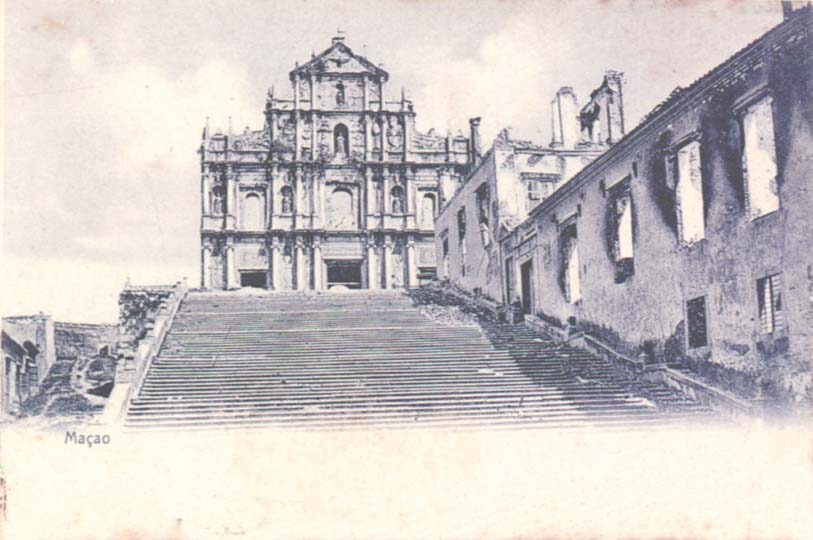
大三巴牌坊(一八七四年),九月廿二日的一場颱風使旁邊一列摟房嚴重損毀
Ruínas de S.Paulo(1874) No dia 22 de Setembro, um forte tufão destruíu os edifícios ao lado das Ruínas
St.Paul’s Ruins(1874) on 22 September, a fierce typhoon destroyed a row buildings beside the cathedral.
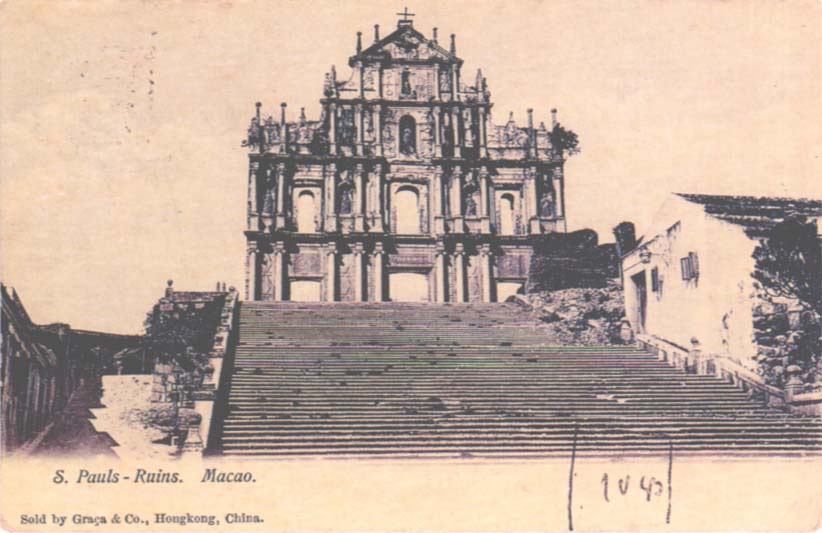
大三巴牌坊(約一八九零年)
Ruínas de S.Paulo (por volta de 1890)
St. Paul’s Ruins (approx. 1890)
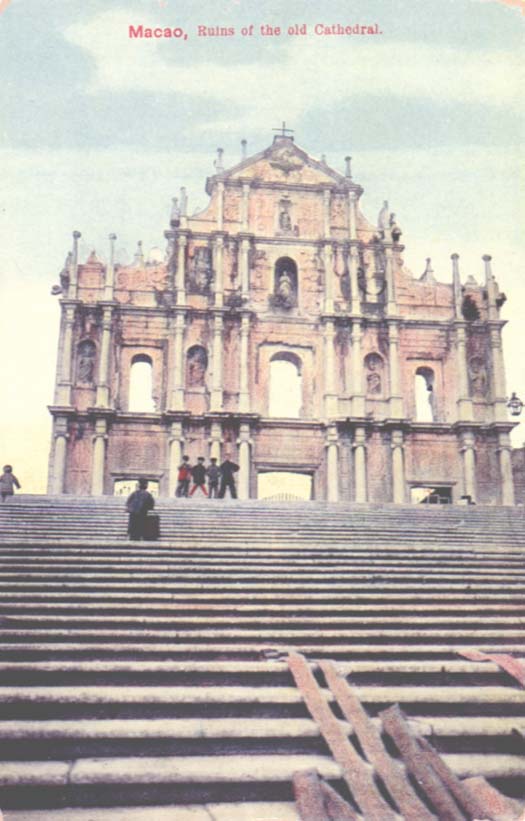
大三巴牌坊(約一九零零年)
Ruínas de S. Paulo (por volta de 1900)
St. Paul’s Ruins (approx.1900)
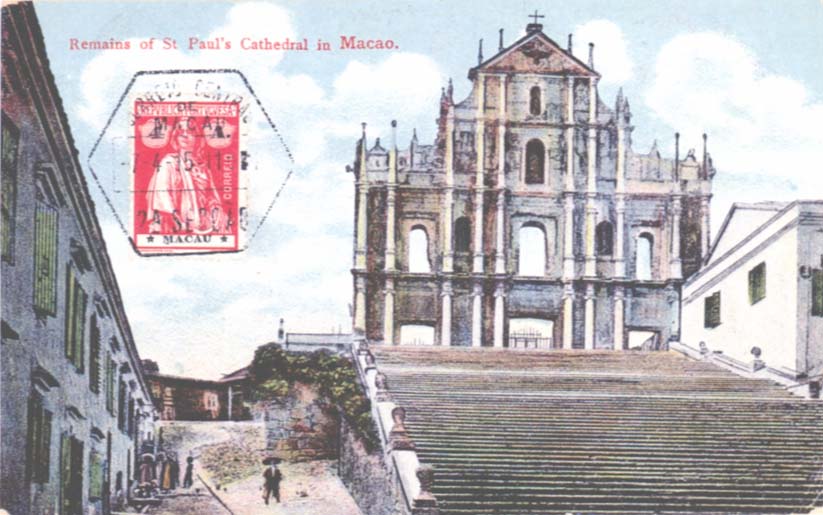
大三巴牌坊(約一九一零年)
Ruínas de S. Paulo (por volta de 1910)
St. Paul’s Ruins (approx. 1910)
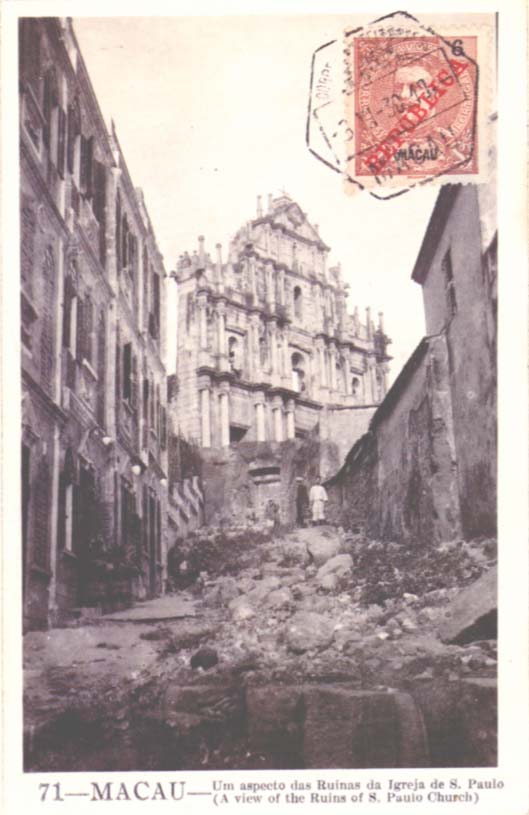
從戀愛巷看大三巴牌坊(約一九二五年)
Ruínas de S. paulo vistas da Travessa da Paixão (por volta de 1925)
St. Paul’s Ruins viewed form Travessa da Paixão (apprax. 1925)
大砲台
大砲台位於澳門市中心的柿山之上,與大三巴牌坊相鄰,故又名三巴砲台、中央砲台。由於它是澳門規模最大的砲台,保存古砲最多,而且又位於鬧市附近,一直都是澳門最著名的名勝之一,在此除可發思古幽情外,還是觀看澳門市區全景的最佳地點。大砲台始建於一六一六年,由於當時有海盜出沒,葡人遂建砲台以保護大三巴敎堂的敎士及附近的居民。一六二二年,荷蘭人進攻澳門,即被大砲台上的大砲所擊潰,而操砲者即是意大利天主敎的神父。一九六六年,澳門天文台遷到大砲台後,長期列為軍事禁區的大砲台,遂開放成為遊覽地點,近年更修築了砲台下的一條環山小徑,成為晨運人士的樂園。
FORTALEZA DO MONTE
A Fortaleza do Monte situa-se no centro de Macau, contíguo às ruínas de S.Paulo. Trata-se da maior Fortaleza de Macau, e guarda no seu interior o maior número de peças de artilharia antiga. Além disso, devido `a sua localização junto ao centro da cidade, a Fortaleza tem sido um dos polos turísticos de maior atracção de Macau. Acresce ainda o facto de dalí se disfrutar um panorama ímpar da cidade de Macau. A construção da Fortaleza começou-se em 1616, quando as águas de Macau se encontravam infestadas de piratas. Os portugueses construiram-na para proteger os religiosos da Igreja de S. Paulo e a população das redondezas. Em 1622, os holandeses atacaram Macau tendo sido imediatamente escorraçados pela artilharia ali instalada, manobrada por religiosos católicos de origem italiana. Com a instalação dos Serviços Meteorológicos de Macau, em 1966, a Fortaleza do Monte,que era zona militar interdita, transformou-se num dos locais turísticos mais procurados. Com a abertura de um trilho à sua volta, a Fortaleza do Monte transformou-se no paraíso para os amantes da natureza.
MONTE FORTRESS
Monte Fortress is situated in the centre of Macau, next to the Ruins of St. Paul.Monte Fortress is the biggest fortress in Macau and keeps the largest store of ancient artillery. In addition, as it is located near downtown, it has always been one of the most famous places of interest in Macau. Besides being a unique place for people to muse over events of the remote past. Monte Fortress is also the best spot for getting a full view of the urban district of Macau. The constuction of the Monte Fortress was begun in 1616, when Macau waters were haunted by pirates. The Portuguese built the fort to protect the priests in Saint Paul' s Church and the inhabitants around. In 1622, the Dutch attacked Macau and were defeated by the artillery of Monte Fortress immediately. The people who manipulated the artillery were the ltalian Catholic priests. Since the Macau Meteorological Observatory shifted to Monte Fortress in 1966, Monte Fortress, which was a prohibited military zone for centuries has been opened as tourist haunt. In recent years, a small mountain path has been built around the fortress and Monte Fortress has become an ideal paradise for morning walkers.
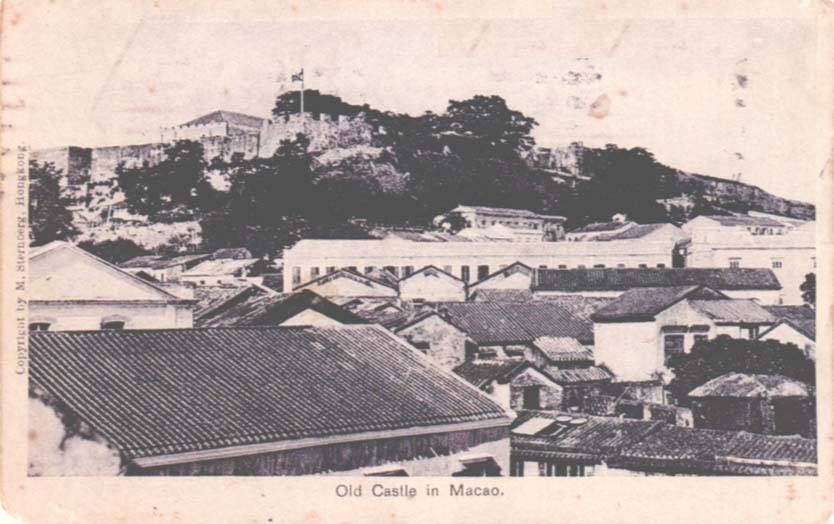
大砲台(約一九一零年)
Fortaleza do Monte (por volta de 1910)
Monte Fortress (approx. 1910)
松山及松山燈塔
松山又名東望洋山,由於一六二二年荷蘭人欲佔澳門失敗,其指揮官名基亞與一群戰俘修築山上的砲台,所以又名基亞山。松山高九十三公尺,是澳門半島第一高峰。山上有敎堂、砲台及燈塔,燈塔更是遠東第一座燈塔,於一八六五年完成,這靠火水燈發光的燈塔,射程達廿五海浬,成為了附近海域的航海標誌,可是在一八七四年九月的一場特大颱風,將燈塔吹毀,停止照射澳門海面,經過多年的修理,更換新照明系統,至一九一零年六月廿九日才重放光明,火水燈亦以電燈代替了。
O MONTE E O FAROL DA GUIA
O nome de Guia deriva da invocação de Nossa Senhora da Guia, dada à Capela construída no ponto mais alto do monte. Também conhecido por Tung Mong Yeong,tem 93 metros de altitude, sendo a mais alta colina de Macau. No seu topo, além da capela, encontra-se uma fortaleza e um farol. Este, concluído em 1865, é o farol mais antigo do extremo oriente. Apesar da sua luz derivar de lâmpadas de querosene, era visível a vinte e cinco milhas náuticas, tendo-se tornado uma baliza para os navegadores da região. Em Setembro de 1874, um forte tufão destruiu o farol que, desde então, deixou de iluminar as águas de Macau. Após anos de reparações, e da instalação da iluminação eléctrica, que substituiu a anterior, o Farol da Guia retomou o seu brilho em 29 de Junho de 1910.
GUIA HILL AND GUIA LIGHTHOUSE
The name of Guia Hill, also called East Mong Yeong Hill, is orginated from the Chapel "Nossa Senhora da Guia" which was constructed at the top of the hill. Guia Hill is ninety-three metres high, the highest hill in Macau Peninsula. On the hill we can find churches, fortresses and a lighthouse. Guia Lighthouse, completed in 1865, is the oldest lighthouse in the Far East. Though the light came from kerosene lamps, it radiated over a range of twenty-five nautical miles and became the beacon light for navigators in the region. The lighthouse was destroyed in a catastrophic typhoon in September 1874 and stopped shining over Macau waters. After years of repairs and installation of a new electric lighting system, which replaced the kerosene lamps, it started to shine again on 29th June 1910.
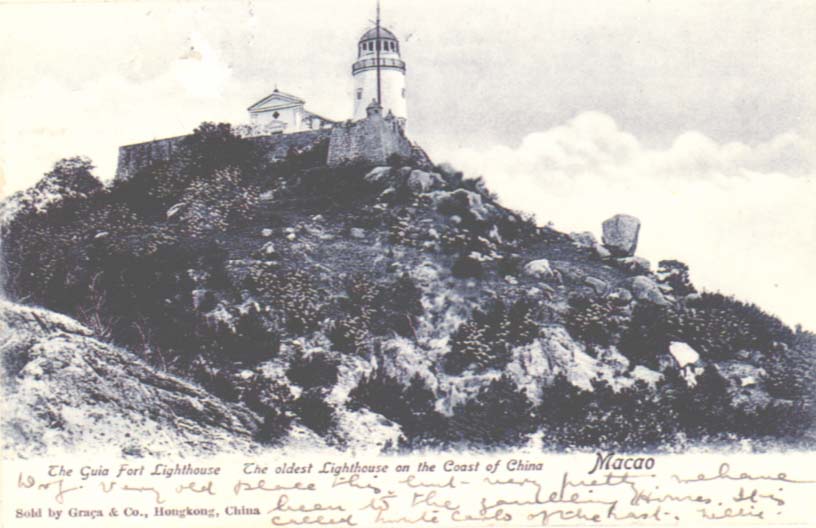
松山燈塔(約一八九零年)
Farol da Guia (por volta de 1890)
Guia Lighthouse (approx. 1890)
主教山
主敎山又名西望洋山,高六十九公尺。一六二二年前曾建有一座堡壘,稱為卑拿砲台,故主教山的葡文名字稱為卑拿山。砲台廢棄後,在該址建了一座西望洋聖母堂,至一九三五年,大肆重修,改建成現在的樣貌。一九五三年,又在聖母教堂後建成澳門主教府,主敎山之名由此而起。登臨主敎山可以遙望南西灣的景色,風景秀麗,一直是官紳名流聚居之處,澳督及各政務司官邸盡在於此,而已故的澳門華人代表何賢先生巨宅,最近已拆卸並將改建成一所美輪美奐的五星級酒店。
COLINA DA PENHA
A colina da Penha, com 69 metros de altitude, é também conhecida pelos chineses por colina de Mong Yeong Oeste. Até 1622, existia no local um forte conhecido por Forte da Penha. Após o seu abandono, erigiu-se no seu local a Ermida da Senhora da Penha, que sofreu transformações até à forma actual, tendo sido acrescentado em 1953, a seu lado, o Paço Episcopal. Dai que a colina seja também conhecida pelos chineses como a Colina do Bispo. Dominando a baía da Praia Grande e o forte de N. Senhora do Bom Parto, a colina da Penha ocupa um local tão aprazível que tem sido, desde sempre, área residencial por excelência dos altos dignatários do Território, como o Governador e seus Secretários-Adjuntos. A mansão do falecido comendador Ho Yin (que foi enquanto vivo o dirigente da comunidade chinesa local), situada também nessa colina, foi recentemente demolida, para dar lugar a uma unidade hoteleira de luxo.
PENHA HILL
Penha Hill, sixty-nine metres high, is also called West Mong Yeong Hill. Before 1622, there was a castle on the hill called Fortress Penha, Monte Penha in Portuguese. After the castle was abandoned, Our Lady of Penha Church was built on its site. The church was reconstructed and became what it is today. The Bishop's Residence was built behind Our Lady of Penha Church in 1953. That is why Penha Hill is also named Bishop's Hill. Overlooking Praia Grande and Bom Parto Beach, Penha Hill commands a breath-taking view. The scenery is so beautiful that Penha Hill has always been a favourite residential area for high officials and celebrities including the Governor and the Under-Secretaries of the Macau Government. The stately home of Mr. Ho Yin (the late leader of Macau Chinese communities) on Penha Hill has recently been demolished to make way for a magnificent five-star hotel.
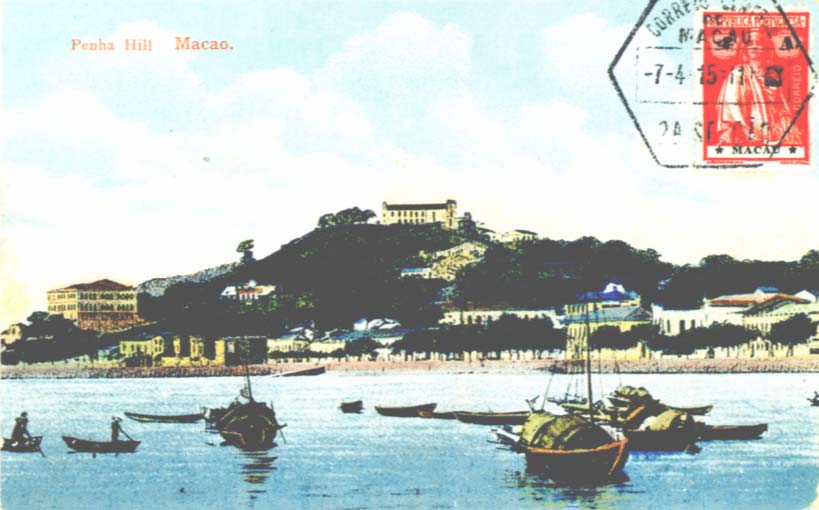
西望洋山及南灣景色(一九零零年)
Paisagem da Colina da Penha e da Praia Grande (1900)
View of Penha hill and Praia Grande (1900)
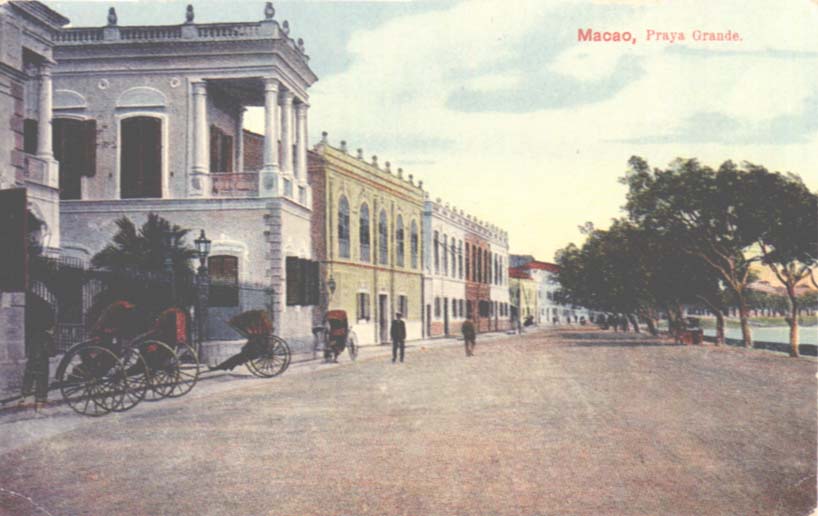
澳督府(約一九零零年)
Palácio do Governador(por volta de 1900)
Government Palaca(approx. 1900)
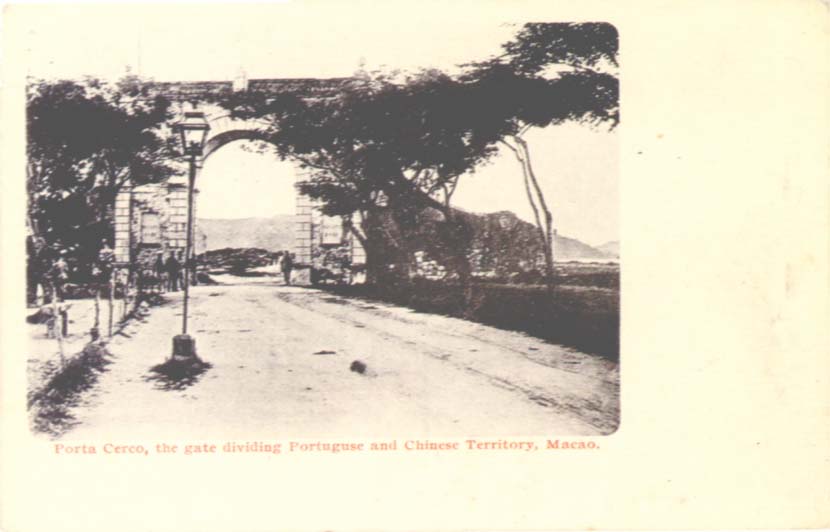
關閘(約一八九零年)
Portas do Cerco (por volta de 1890)
The Border Gate (approx.1890)
關閘
關閘是分隔中國大陸與澳門之間的一道閘門。現在我們看到的凱旋門式建築物是葡人一八七零年所建的;而在此之前,遠在明朝萬曆二年(一五七四年)已建有一座古關閘存在,位置比現在的稍南,約在關閘馬路的中段,是中國政府建造來加強對澳門葡人的監管,及對出口糧食到澳門的控制。鴉片戰爭後,葡人勢力向北擴展,拆毀古關閘,另在較北的地方興建現今所見的關閘門。數百年以來,關閘都是澳門與中國大陸的陸上交通必經之路,也是澳門居民糧食的主要入口地方。現關閘門已不用作出入境處,而是改建為旅遊區。
PORTAS DO CERCO
As Portas do Cerco situam-se na fronteira entre Macau e a China. O edifício, como o conhecemos hoje, ao estilo de arco de triunfo, foi construído pelos portugueses em 1870.Mas muito antes desse ano existiam umas portas do cerco mais antigas, construídas em 1574, durante a dinastina chinesa Ming. Situavam-se mais ao sul das novas Portas do Cerco, algures a meio da actual Rua das Portas do Cerco. Foram Construídas pelo então Governo chinês para reforçar a vigilância sobre os portugueses em Macau, e para controlar a exportação de alimentos para o Território. Após a Guerra do Ópio, os portugueses expandiram-se em direcção ao norte. Demoliram as antigas Portas do Cerco e construíram as actuais mais um pouco ao norte. Durante séculos, o local constituiu a única passagem para os que se deslocavam de e para a China por terra, e a principal via de importação de alimentos para Macau. Actualmente, as Portas do Cerco, substituídas por uma fronteira, deixaram de ser ponto de passagem, convertendo-se apenas num local de atracção turística.
BORDER GATE
Border Gate is a gate standing between mainland China and Macau. The Triumphal Arch-style building that we see nowadays was built by the Portuguese in 1870. But long before that, there had been an older Border Gate which was built in 1574 during the Ming Dynasty of China. It was situated to the south of the new Border Gate, somewhere in the middle of Rua da Portas do Cerco. It was built by the Chinese Government to reinforce watch on the Portuguese in Macau and control over food exported to Macau. After the Opium War, the Portuguese started to expand towards the north. They demolished the older Border Gate and built the present Border Gate to the north. For centuries, the Border Gate has been the only gateway for people to travel between mainland China and Macau by land and the main entrance through which the residents of Macau import their food. Nowadays, the Border gate is no longer an entry-exit point but a spot for tourists.
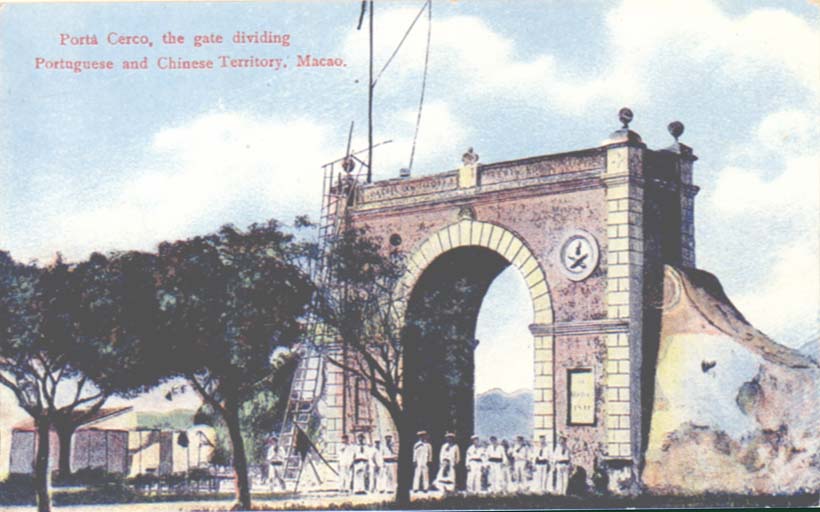
關閘(約一九零零年)
Portas do Cerco (por volta de 1900)
The Border Gate (approx.1900)
市政廳
市政廳古稱議事亭,它前面的廣場現仍稱為議事亭前地。葡人初來澳不久,明朝官員為了與葡人商談貿易和居留問題,在此建了一座四面通風的亭子,每有商談,雙方即會晤於此。至一七八四年,葡人購入該亭及加以改建成現今所見之古老西方建築形式。一五八零年,葡王殷里基老死無兒,西班牙王菲力二世以血緣關係對葡萄牙王位有最優先權為藉口,以武力吞併葡萄牙,直至一六四零年,葡王約翰四世即位復國;在此六十年間,議事亭仍懸掛葡萄牙國旗,葡王約翰四世因此於一六五四年向澳門頒以“天主聖命下,無比忠誡的城市”之稱號。
LEAL SENADO
O Leal Senado é também conhecido entre os chineses de Macau por "Pavilhão das Negociações". Aquando da chegada dos portugueses a Macau, os oficiais da Dinastia Ming construíram um pavilhão aberto, bem arejado, onde pudessem negociar com os portugueses assuntos relacionados fosse com o comércio, fosse com a fixação de residência. Os portugueses adquiriram-no em 1784, e transformaram-no no edif'icio com traça ocidental tal como o conhecemos. Com a morte do cardeal D. Henrique, em 1580,sem herdeiro, subiu ao trono de Portugal D. Filipe II de Espanha que então, alegando laços com a coroa portuguesa, anexou Portugal pela força até à subida ao trono por parte de D.João IV, em 1640. Nos sessenta anos que medearam entre 1580 e 1640, a bandeira portuguesa manteve-se sempre içada no Leal Senado, o que lhe grangeou o título de "CIDADE DE NOME DE DEUS, NÃO HÁ OUTRA MAIS LEAL".
LOYAL SENATE
Called ‘ Yi Si Pavilion ' in the old days, Loyal Senate has a square in front of itLargo do Senado, which is also called Yi Si Pavilion Square nowadays. When the Portuguese first carne to Macau, the Ming Dynasty officials of China built an open, wellventilated pavilion where the Chinese officials and the Portuguese met to discuss trade issues and residence. The Portuguese bought the pavilion in 1784 and turned it into the classical western building as we see now. King Henrique of Portugal died in 1580 without leaving an heir. Philip II of Spain, claiming blood-relation and next of kin to the crown of Portugal, annexed Portugal by force until João Ⅳ of Portugal ascended the throne and resumed sovereignty over Portugal in 1640. During the sixty years between 1580 and 1640, Loyal Senate still hoisted the Portuguese flag and in 1654, Macau was awarded the title of ‘ CITY OF THE NAME OF GOD, THERE IS NONE MORE LOYAL '.
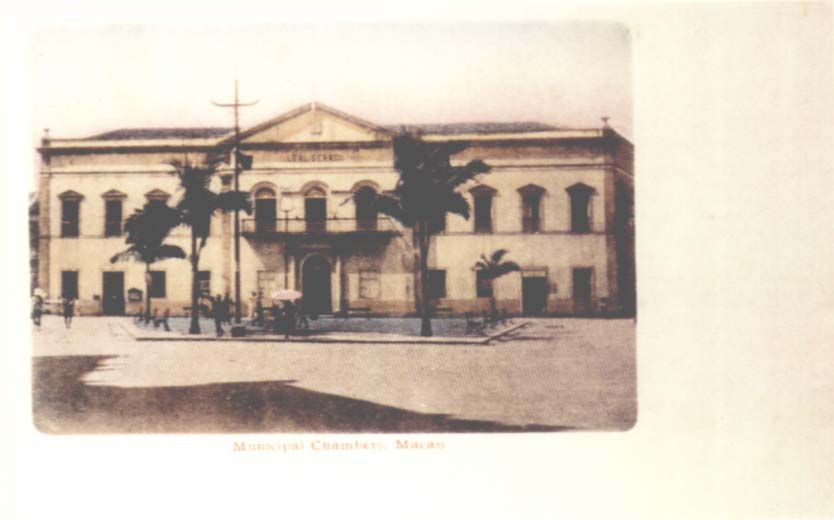
市政廳(約一九二零年)
Leal Senado (por volta de 1920)
The Loyal Senate (approx. 1920)
峰景酒店
峰景酒店座落的地方原是一座古砲台——竹仔室砲台。這座澳門現存最古老酒店位處西灣的東端,大概落成於十九世紀末,其時西灣仍未填海築路,民國馬路尚未存在。它的首任主人是港澳客輪香山號的英籍船長,其後經過不斷的易手,到了本世紀八十年代末,雖然仍然經營酒店業,但整座建築物已非常殘舊,經由文華東方酒店集團收購,並大肆修葺,於一九九三年重新對外開放。由於峰景酒店地處西望洋山的半腰,可以遠眺十字門及綠蔭成林的西灣景色,加上酒店本身佈局嚴緊、小巧玲瓏,易於安排保安工作,遂成為專門接待到訪政要的居所,一九九三年葡萄牙總統蘇亞雷斯訪澳,便是下榻於此。
HOTEL BELA VISTA
Localizado num antigo forte-o Forte do Bom Parto construído na parte mais oriental da Praia do Bom Parto-foi construído como residência de uma família macaensa nos últimos anos do século XIX, quando ainda não existia sequer a actual Avenida da República. O seu primeiro dono, como hotel, foi um cidadão inglês, capitão do navio Heung Shan,que fazia as ligações entre Hong Kong e Macau. Tendo conhecido diversos donos, o hotel mantinha-se ainda em actividade nos últimos anos da década de 80. Depois de ser comprado e restaurado pelo Grupo do Mandarim Oriental, o hotel reabriu ao público em 1993. O hotel situa-se no meio da colina da Penha, donde são visíveis as ilhas e a paisagem verdejante do Bom Parto. Para além disto, a sua localização, reduzida dimensão, e traça arquitectónica, facilitam a segurança de bens e pessoas, pelo que se transformou em estância preferencial dos mais altos dignatários em visita a Macau. O Presidente da República Portuguesa, Mário Soares, alojou-se no Hotel Bela Vista,durante a sua visita a Macau, em 1993.
BELA VISTA HOTEL
Bela Vista Hotel, nestling in an ancient fortress - Bom Parto Fortress on the eastern end of Bom Parto Beach, was built around late 19th century when neither Bom Parto Beach nor Avenida da República came into existence. The first owner of Bela Vista Hotel was the British Captain of Heung Shan (The liner shuttling between Hong Kong and Macau ).After changing hands many times, the hotel was still in business until the late 1980's.The whole building became so dilapidated that it was sold again, this time, to the Mandarin Oriental Group, which gave it a thorough and complete face-lift. The hotel, half way up Penha Hill, was reopened to the public in 1993. It is the Macau's oldest hotel that still exists today. From the hotel, people can overlook Cross Gate and the greenwood of Bom Parto Beach. In addition, the hotel is small, exquisite and perfectly designed, easy for security arrangements. Therefore it has become the residence of important figures visiting Macau. President Soares of Portugal stayed in Hotel Bela Vista when he visited Macau in 1993.
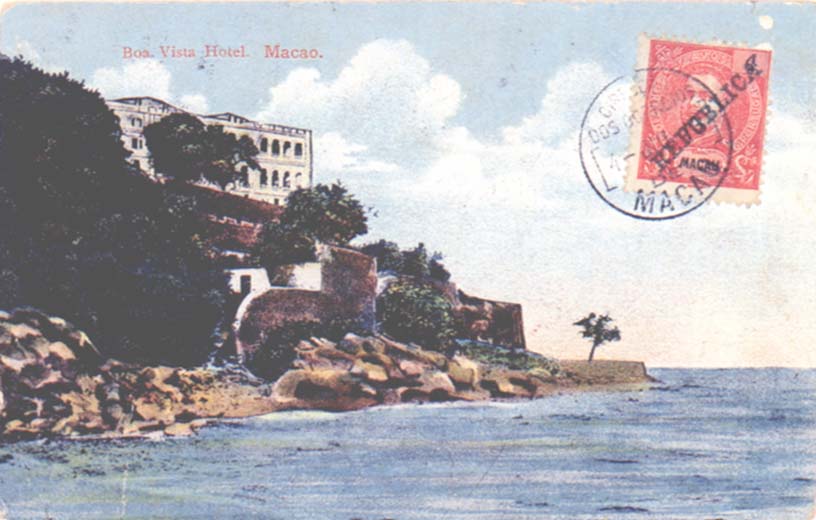
峰景酒店(約一九零零年)
Hotel Bcla Vista (por volta de 1900)
Bela Vista Hotel (approx. 1900)